An Interview with the author: The Rose of Jericho
I sat down for an interview with fellow writer Allie E. to talk about my latest novel, The Rose of Jericho. Below are some excerpts.
Allie: Here we are again! First things first: the title. The Rose of Jericho. It's a beautiful title and a beautiful metaphor. What drew you to that?
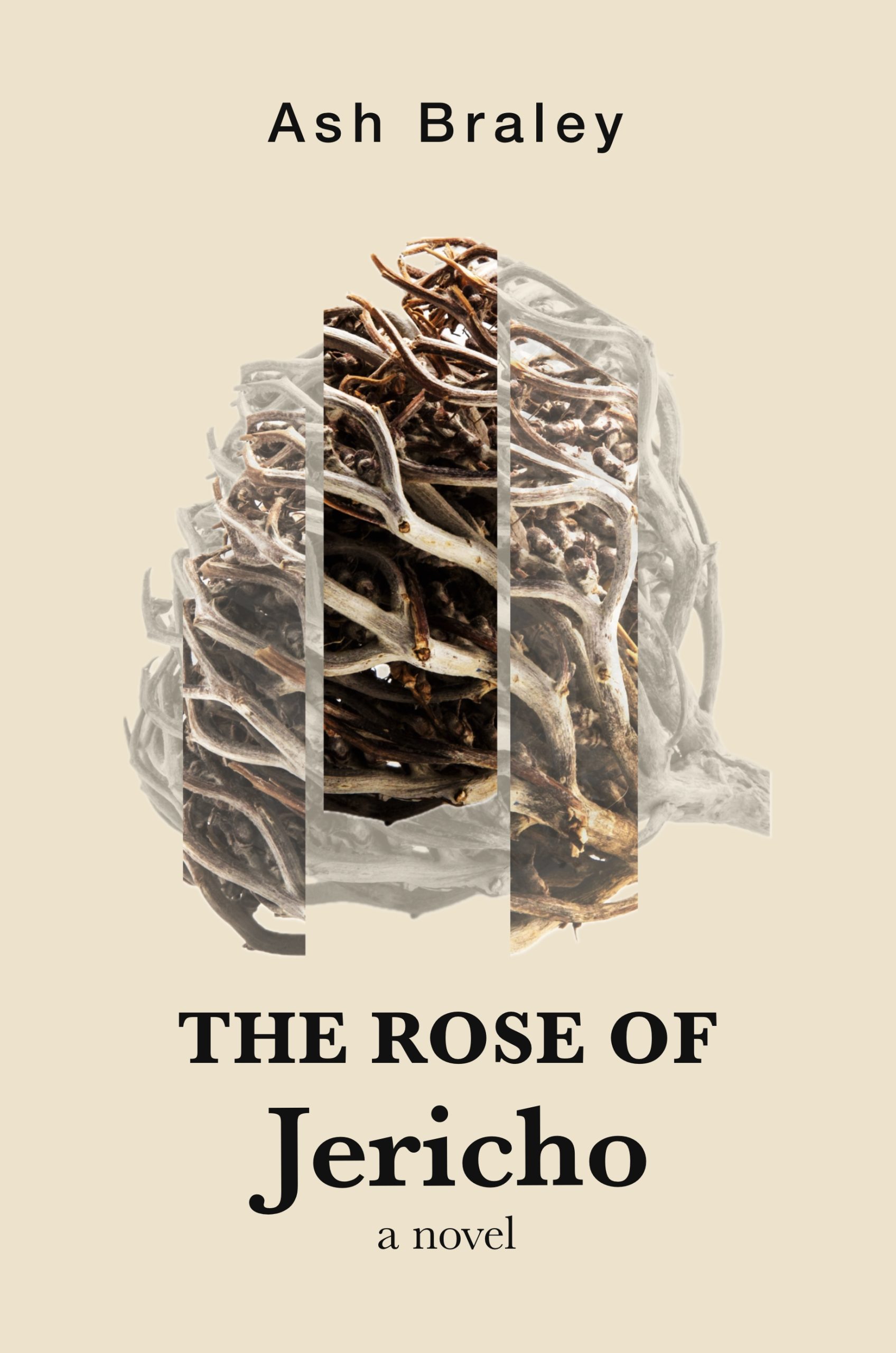
Ash: Funny thing, the title is what came first, even before the story arrived. I always knew that the resurrection plant would be a central image. Something dormant that gets rehydrated and begins to flourish.
Allie: This book feels more interior, more psychological, maybe even more intimate than the earlier books. Did it arrive that way from the beginning, or did it become that kind of novel as you wrote it?
Ash: When it first arrived it was a completely different book, a different kind of story. In fact, this is the third version I've written. It started as more action-oriented, with lots of dramatic twists and turns, but the story I most wanted to tell was more personal, from deep in the psyche.
Allie: That sounds more literary, but lest anyone get the wrong impression, this one is just as readable as your previous books. I finished it in one sitting. But the tone is different. We're used to seeing Cass as very confident and purposeful. Here we see another side of her, and she's not nearly as self-knowing as she always thought she was. What did you most want to put her through this time?
Ash: She needed to go deep instead of just doing what's worked for her in the past. Deep into memories, her unconscious, because that's where the interesting things are going on. And I wanted to explore how truth can emerge in a dream-world. Sometimes dreams are the only way to see the truth. But specifically what I put her through? Seeing that the familiar ways she accommodates stress in her life were no longer effective.
Allie: For one thing, she relies on routines in a way that’s revealing. In RoJ we begin to see where some of those rituals come from, right?
Ash: We all have a relationship to routines, love them or resist them. When Cass started to really look at hers, she began to to see herself in a new way.
Allie: She spends more time alone in this book. In the first two books she spent a lot of time interacting with "oddballs and misfits", as you describe the tiny house dwellers at the Fields of Concorde. Here we find her in a more solitary place.
Ash: She thinks she's escaping to a seaside retreat where she'll be able to write, not realizing that she's also responding to a deeper intuition. Opening to her creative process drops her into a time of self doubt, old fears, awakening memories, all vying for her attention.
Allie: She's accompanied by ...
Ash: Her witness on the journey is Caitlin, her daughter. Cass's mother had said that she was breaking a long pattern in her family of abused women, but Cass doubted that. Caitlin's presence is a constant reminder to Cass that it is now her own responsibility to accept the past and let go.
Allie: That's a very different approach to telling the story of generations of women. Why did you structure the book this way?
Ash: In those previous drafts I mentioned, there were other points of view, excerpts from old journals, flashbacks to the past - but none of that belonged in the story, which is how a person recovers their own truth about who they are. In real life, there isn't any one place to get a definitive history - only each person's version of it. That made her journey a solitary one. If she didn't figure it out for herself, she wouldn't be able to heal the wounds of the past. It had to be done alone. Or - so she thought.
Allie: I'd love to pop in a spoiler right now. Instead, I'll ask, was there a particular inspiration for her vivid dream world?
Ash: It wasn't an inspiration. It arrived all at once one morning while I was having my tea, idly sketching in my journal. All of a sudden there was a sky of bone and ash overhead, and the rest appeared. That's honestly how it came about, although at the time I didn't even realize the significance.
Allie: Neither did Cass, at first.
Ash: I believe that art is always present in the unconscious.
Allie: That's the heart of the book, right there! What's one sentence to describe that?
Ash: I think of my unconscious as a private studio, where the work is already underway before I arrive. The ether is packed with books waiting for a curious writer to come along and pull them down.
Allie: Perfect segue into my last question: What's tapping on your shoulder from the ether now? You've left some tantalizing clues in The Rose of Jericho.
Ash: I will say that The Fields of Concorde is a trilogy. The Rose of Jericho is Book 3. The next book discussion we have will be completely different.
The Rose of Jericho can be ordered HERE